
The numbers
The three measurements that decide everything
Damaged uprights are assessed against three measurements: front-to-back deflection, side-to-side deflection and twist over a 1 metre length. The numbers are small — but they are the difference between a green rating and a forklift exclusion zone.
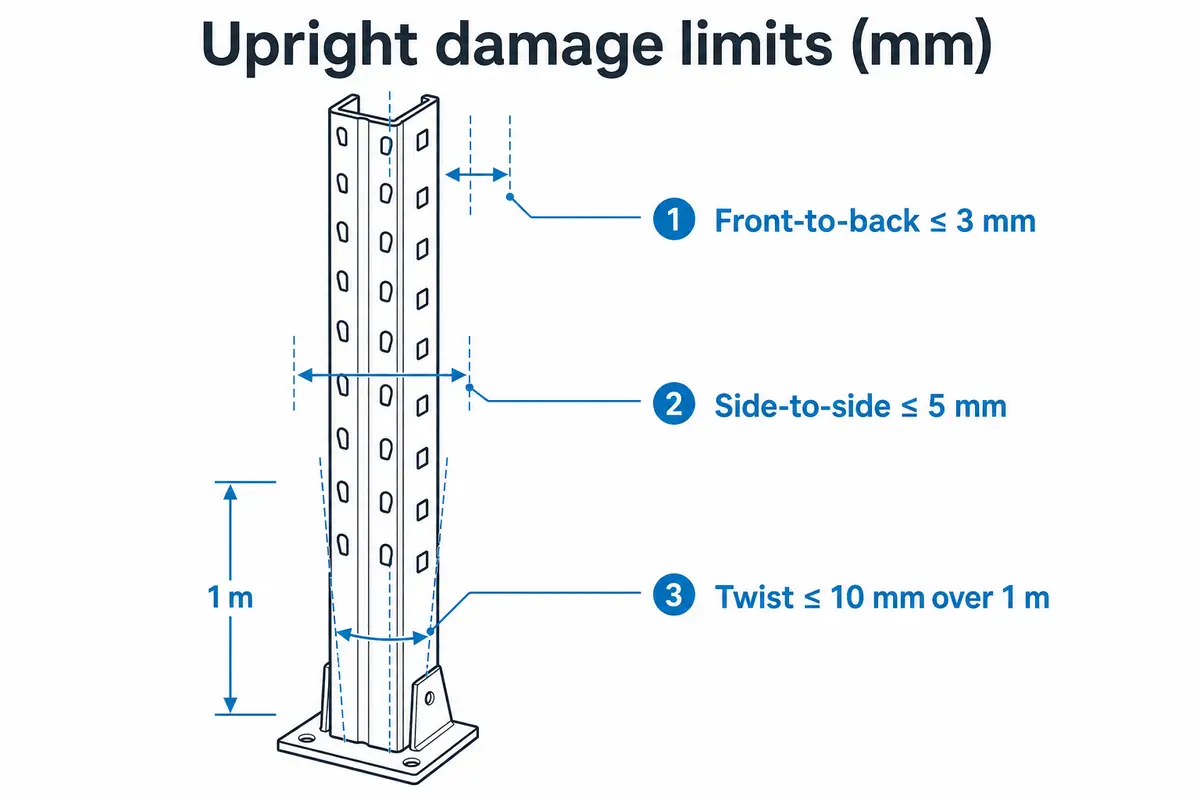
| Direction | Limit | What triggers it |
|---|---|---|
| Front-to-back | ≤ 3 mm over 1 m | Forklift fork-tip strike at base level |
| Side-to-side | ≤ 5 mm over 1 m | Pallet overhang, lateral forklift contact, side-shift impact |
| Twist (rotation) | ≤ 10 mm over 1 m | Cumulative oblique impacts or bracing failure |
How it's measured
The 1-metre straight-edge method
Every measurement is taken with a 1 metre straight-edge laid against the upright. The maximum gap between the straight-edge and the column is the deflection. Inspectors record the worst section, not an average — if a single 100 mm length is 4 mm out, the upright fails front-to-back.
- Place the straight-edge on the worst-looking section of the column.
- Measure the maximum gap with a steel rule or feeler gauge.
- Photograph the gap with a tape measure visible.
- Record the measurement in the inspection register against the bay label.
- Mark the upright with a damage tag and notify the warehouse supervisor immediately.
- Isolate stock from above the damaged column until rated.
Decision tree
What each result means in practice
| Measurement | RAG rating | Action |
|---|---|---|
| Within tolerance, paint scuff only | Green | Log; monitor at next inspection |
| At or just over tolerance | Amber | Off-load top beams; repair or replace within 4 weeks |
| Significantly over tolerance, visible bend | Red | Stop work, off-load entire bay, replace before re-use |
Don't bend it back
Hot-spots
Where the limits get exceeded most often
Three patterns account for most over-tolerance findings across QLD and NSW warehouses we inspect: high-throughput selective racking in narrow-aisle DCs, drive-in racking in cold-storage rotation, and end-of-row uprights without bollards. If your site has any of these, expect to find damage above the AS 4084:2023 limits at the next inspection — and budget accordingly.