
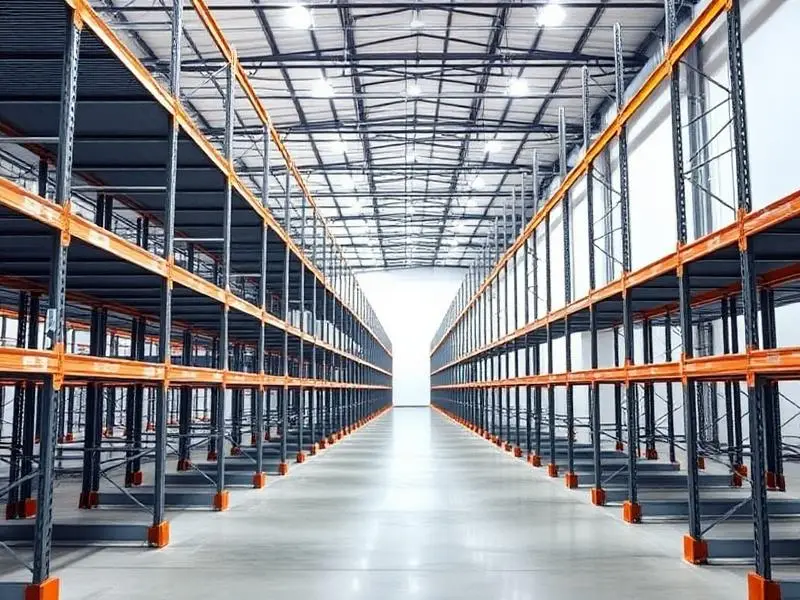
System type
Step 1 — Choose the system type
| System | Density | Access | Best for |
|---|---|---|---|
| Selective | Low | 100% per pallet | Diverse SKUs, mixed weights |
| Drive-in | High | Last-in-first-out only | Few SKUs, high volume each |
| Push-back | Medium-high | FIFO at lane level | Buffer/staging stock |
| Pallet flow | High | True FIFO | FMCG, dated stock |
| Cantilever | N/A | Long products | Steel, timber, pipe |
Capacity
Step 2 — Specify the capacity
Capacity is the intersection of pallet weight, beam UDL and frame rating. Most QLD and NSW warehouses build to a nominal 1,000 kg per pallet, but heavy industries (food manufacturing, building products) often need 1,500 kg+ rated beams.
- Survey the heaviest 10% of pallets — design to those, not the average.
- Add a 15% margin for product growth and seasonal peaks.
- Account for the worst-case beam load (3 pallets concentrated at centre).
- Match frame capacity to total beam load × number of levels.
- Re-rate after any beam-level change.
Finish
Step 3 — Pick the right finish
Finish choice depends entirely on environment. Get this wrong and the racking will need replacement long before its design life. Galvanised or zinc-plated for cold/wet, powder-coat for ambient dry, special epoxies for chemical exposure.
Used vs new
Step 4 — Used or new?
Used racking can deliver 40–60% savings but only if the components are inspected, RAG-rated and brand-matched. Mixing brands in one frame voids AS 4084 compliance and is the most common mistake on used purchases.
Brand discipline
Final step
Step 5 — Install, certify, document
New or used, the install must be performed by a competent installer (QBCC-licensed in Queensland), certified against AS 4084:2023, and accompanied by written load notices at every aisle entry.